THE MEANS OF PRODUCTION
The Means of Production was a synthesizer library that toured Ireland from September - November 2026.
It was designed, produced, and facilitated by FLINTA*, for FLINTA* on the island of Ireland. Following the model of Base Dublin, led by Viva Dean and Ais Phelan, it was a community-driven free-form space in which to encourage peer education and skill-sharing within the structure of a library. It was the first of its kind to happen in Ireland, and the first FLINTA*-led synth library that we are aware of.
We intend to continue The Means of Production via a studio in which to house and access the library. However, we have yet to secure a space in which to do this. Do you know one?
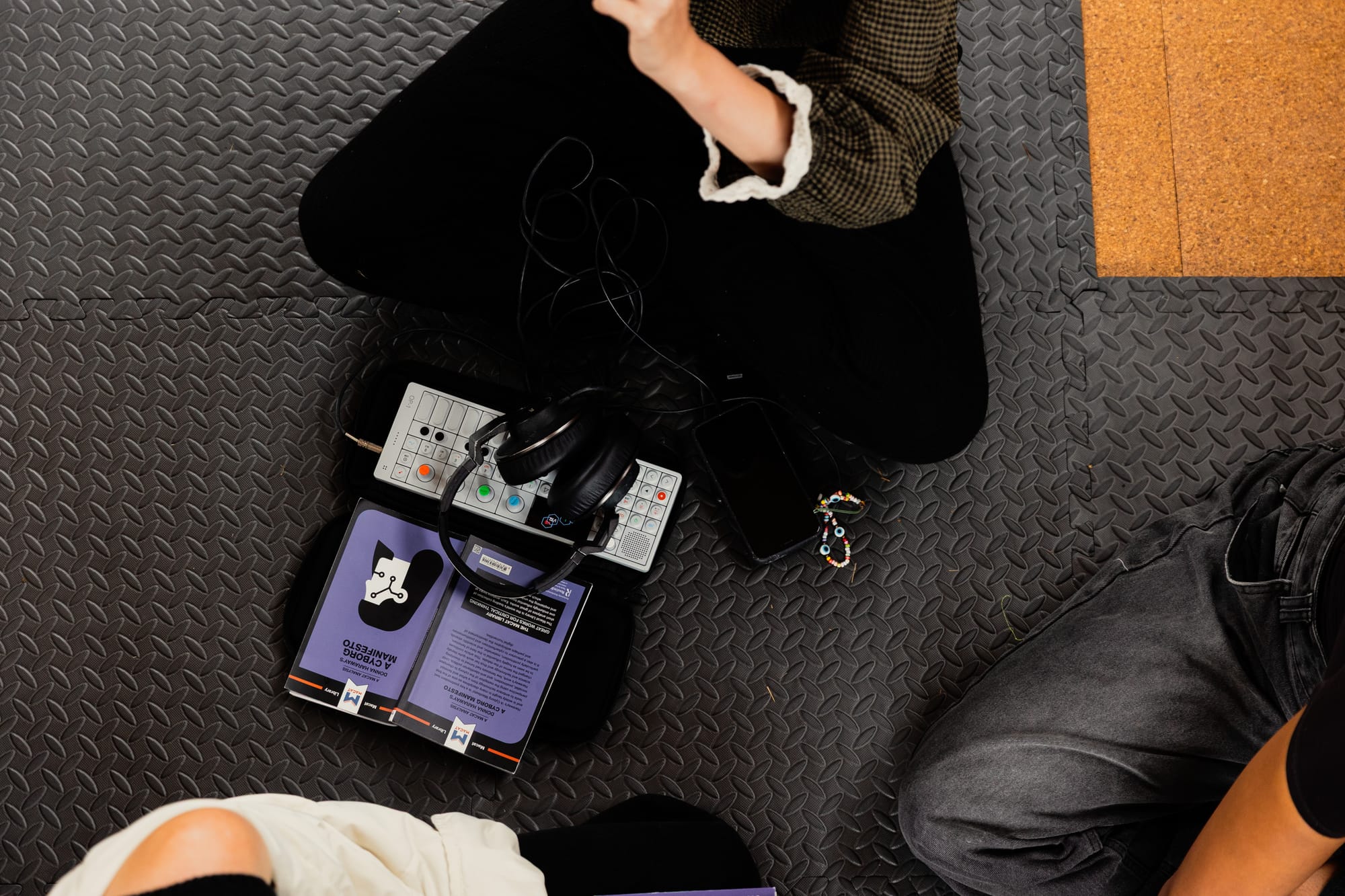
? why ?
The Means of Production was led by curiosity, experimentation, play, and the following questions
? How do we make music technology more accessible for FLINTA* across Ireland ?
? What are the benefits of a free-to-use library of synths ?
? Is this interesting//useful//necessary//viable for this community ?
? Is this within our reach + aims ?
? What will we learn from undertaking this ?
We worked with researcher Andrea Cleary to find out answers to these, conducting a survey of library users over the course of the tour.
? where ?
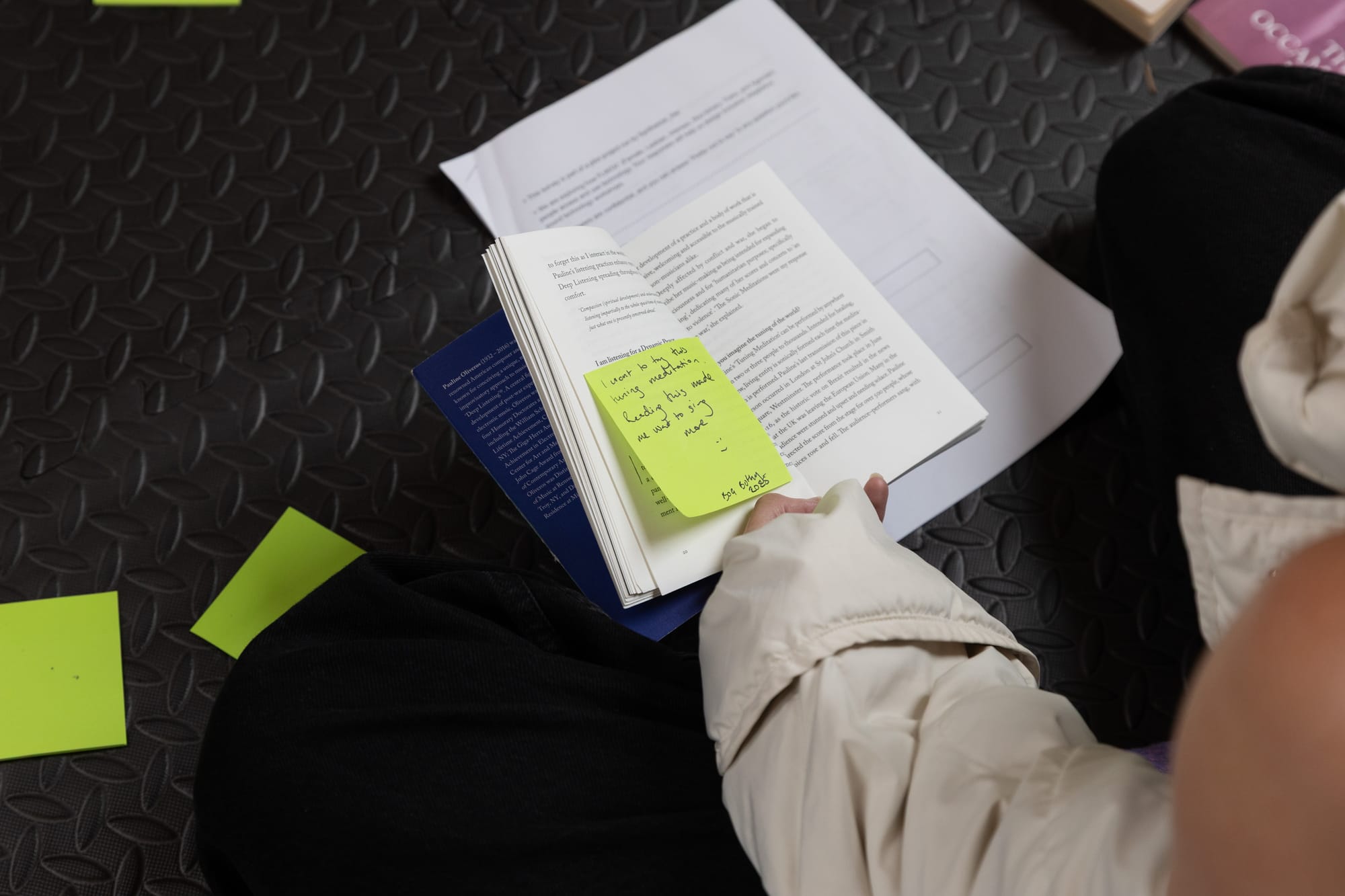
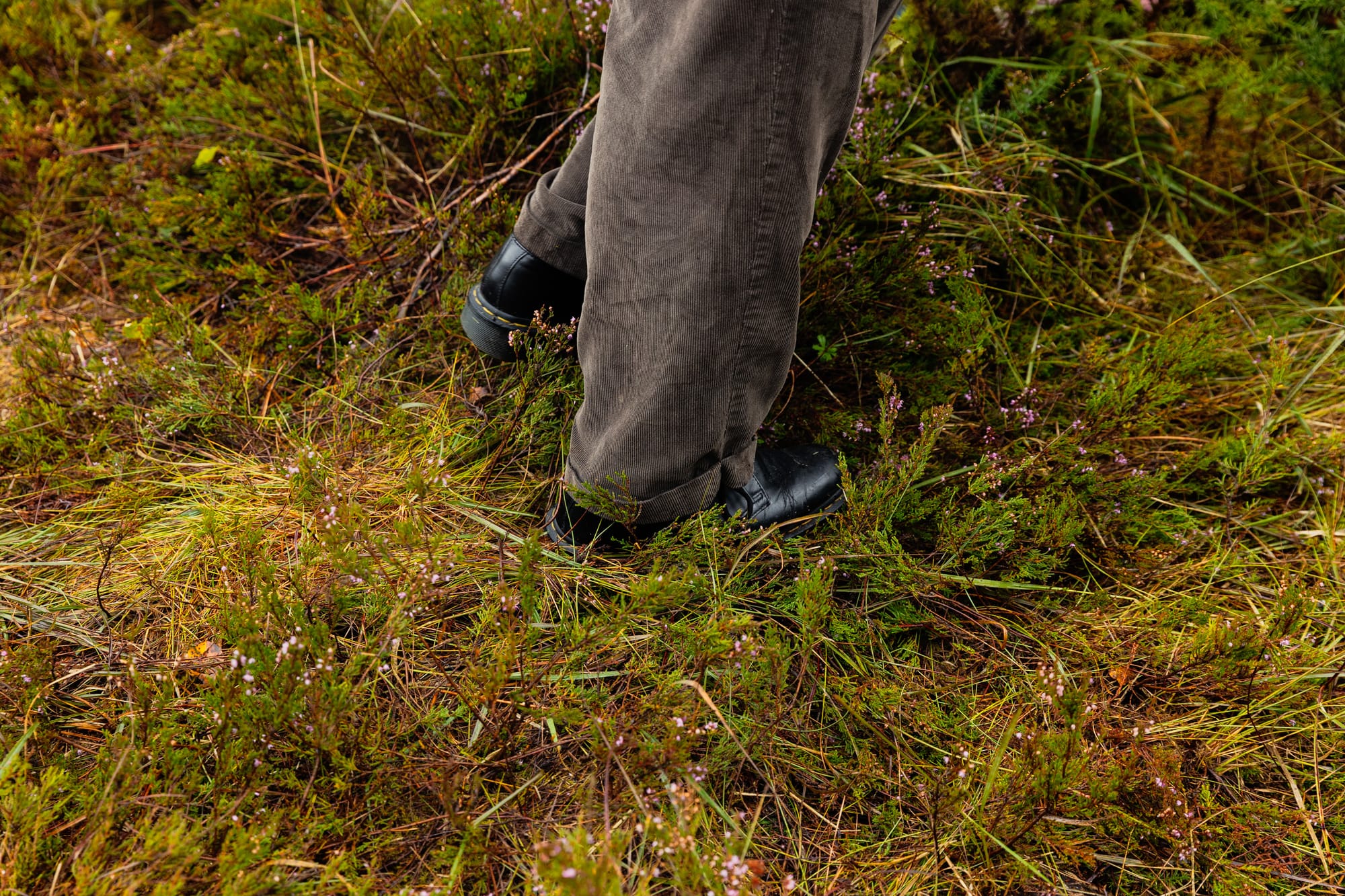
The Means of Production was soft launched in August 2026, at the Bog Bothy in Girley Bog.
The tour then ran from September to November, covering >
- St Andrew’s Community Centre, Dublin
- Rebel Reads, Cork
- St John’s Pavillion, Limerick
- Void Arts Centre, Derry
- 2 Royal Avenue, Belfast
- The Watchtower, Drogheda
- Outcomers, Dundalk
Venues were chosen based on their community significance and ability to reach beyond traditional arts or closed spaces. It was our aim to provide an alternative, non-desk-based, learning environment on each stage of the tour. For many, this was their first time learning music technology in a hands-on, experimental manner.
? what ?
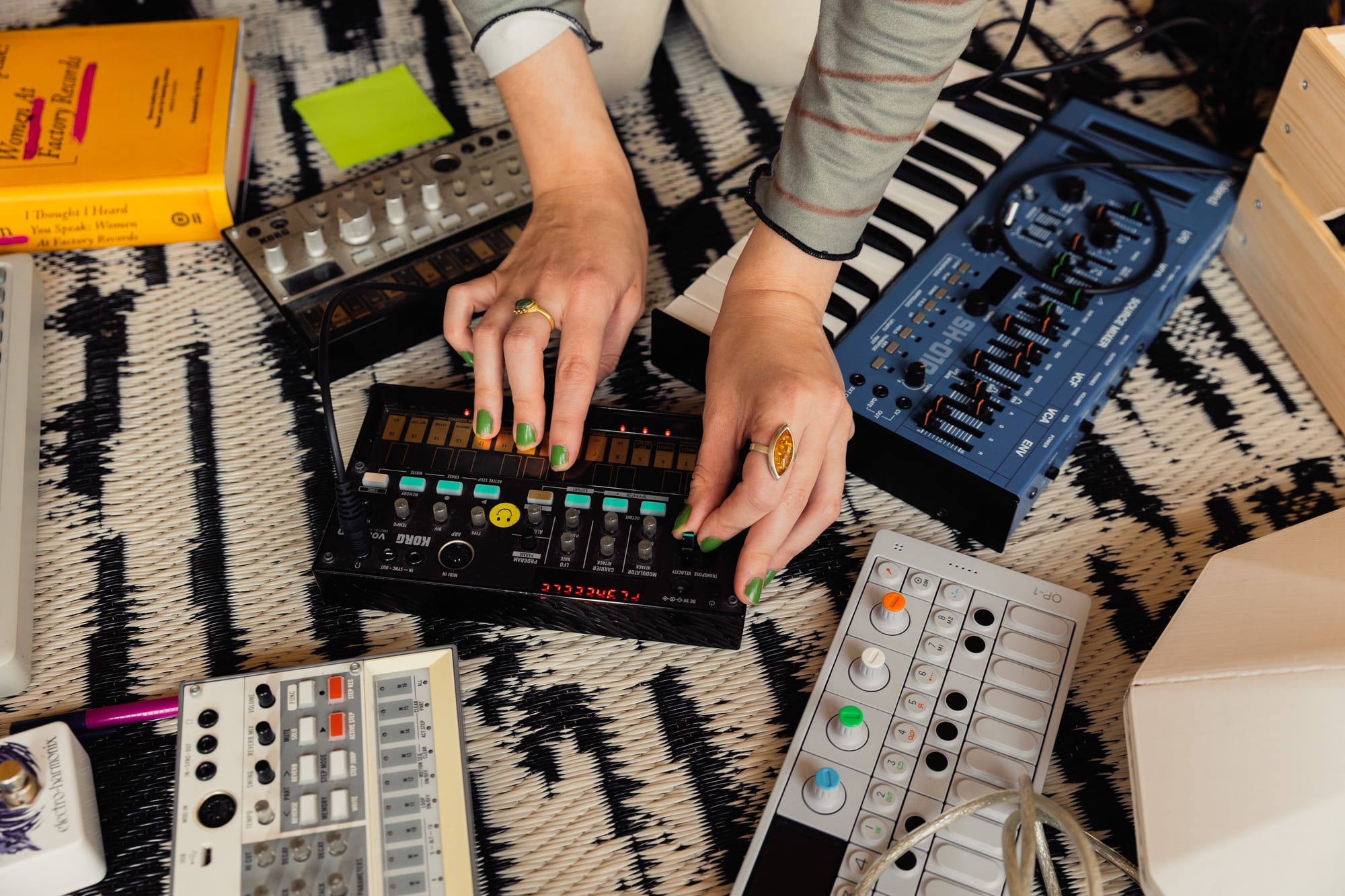
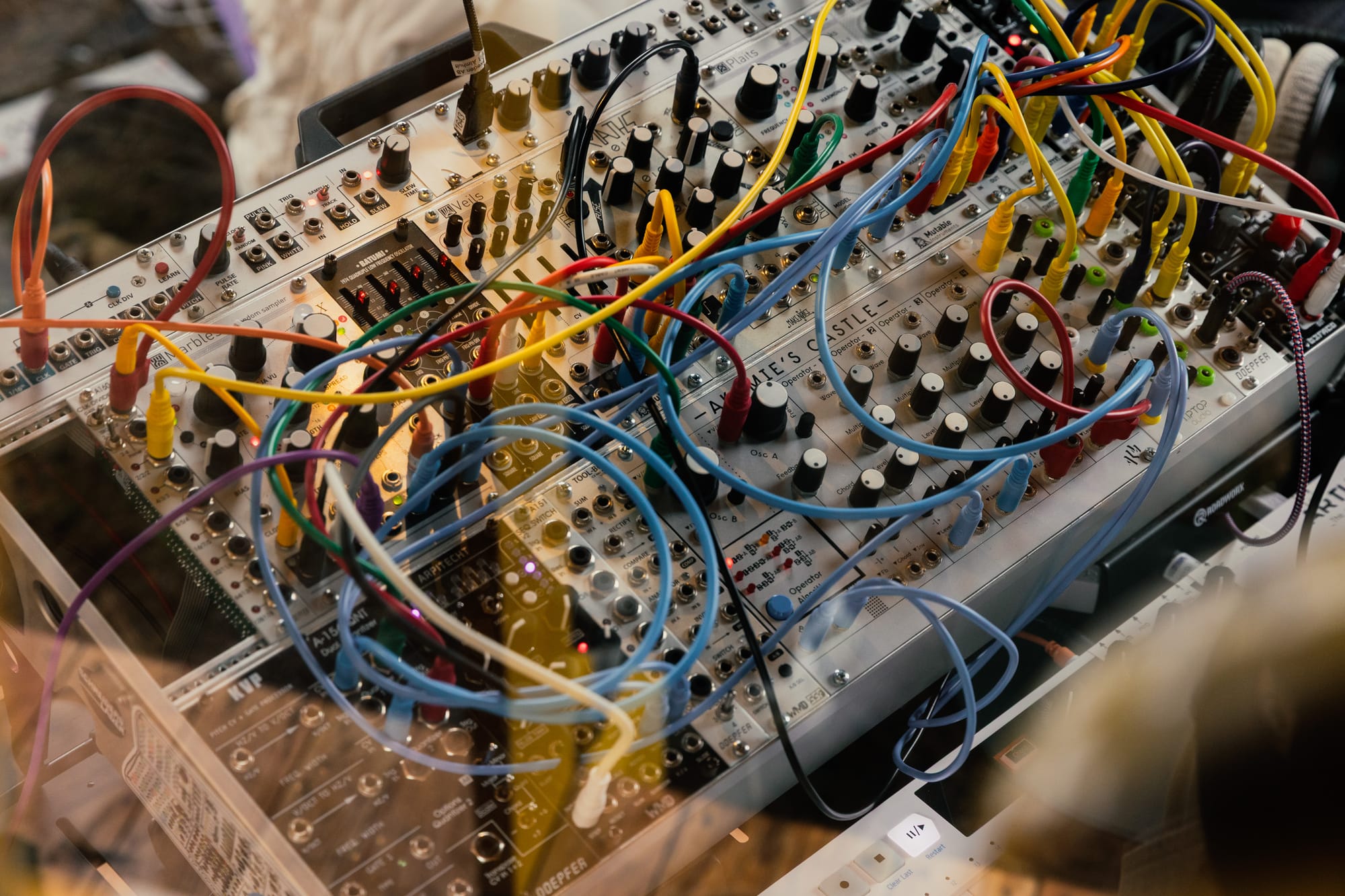
The library contained and travelled with >
~40 synths~
{chosen for communality, gesture, thoughtfulness, intricacy, playfulness, intuitiveness}
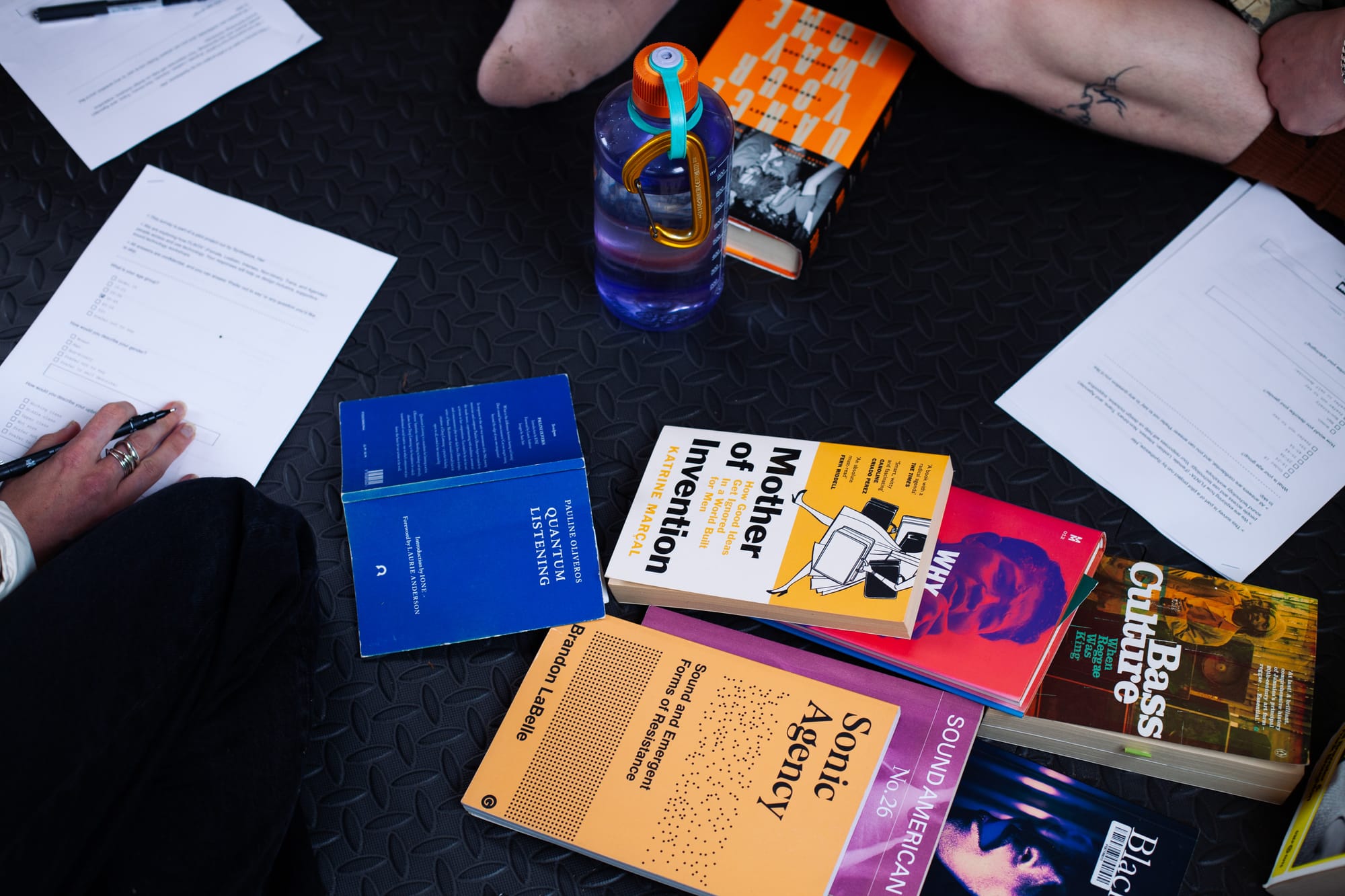
+~50 texts~
{chosen for knowledge on women within sound history, feminist theory, and alternative approaches to technology and resource-sharing}
? how did it look ?
Our modular stage consisted of soft flooring, blankets, cushions, soft lighting, drinks and snacks. We reset this in each venue, expanding//contracting//shaping for each stop, adapting to each space as needed.
> Library-goers were offered an overview of the set-up.
> Participants were invited to browse synths and//or books.
> They then took their borrowed item into the communal soft space.
> Survival guides [leaflets of basic guidance on usage and safety] were given out to help users navigate through questions and record their experiences.
> Headphones were provided to keep shared noise intentional.
> Peer-to-peer learning was encouraged between library users.
> Experiences were mostly unguided, as per the library structure.
> Library days were around 4-6 hours long, drop-in/out.
? inspired by ?
An inconclusive list >
- Queer Sheds
- Test Site
- Glasgow Library of Synthesized Sound
- Rebel Reads
- Independent Community Radio Network
- Our Kids Code
- Analogue Catalogue
- Bloop Groop
- Belfast Tool Library
- Slow Camera Exchange
- Start Together Studio
We decided to produce a touring library of synthesizers and music texts to meet people where they are, offering FLINTA* the chance to use music equipment that is often hidden behind cost and accessibility barriers.
The global figure of women and gender diverse people involved in professional music production (rather than performance) still sits under 5%. This is at least partially due to a layer of gatekeeping and intimidation when it comes to music technology shaped by a patriarchal culture. Resource sharing and trusting the responsibility of users allows us to shape a more equitable electronic sound landscape in Ireland by giving FLINTA* a chance to experiment and create sound. Offering people the chance to just play around as they wish is a methodology that is not often applied in formal teaching or musical environments. Allowing time, interest, and curiosity to shape the experience means that we can at once reach out to those who may have never had this opportunity without imposing assumptions onto them, as well as break down traditional desk-based teaching and foster a more communal, peer-led, less diametric learning environment.
? learnings ?
Did we successfully lead, tour, showcase, and celebrate Ireland’s first synth library?
Yes!
Was it by and for FLINTA*?
Yes!
Did we teach FLINTA* across Ireland about sound technology, and provide a learning environment in which to experiment?
Yes!
Did we build on a network of FLINTA* interested in sound technology, through us and with each other?
Yes!
Did we provide a free-to-access experience with synthesizers and texts, usually only accessible through significant €€€?
Yes!
Did we do this whilst meeting people where they’re at and de-centralising access, in clean, open, facilitated spaces?
Yes!
Were we able to adapt to the needs of labour and be dynamic in our roles?
Yes!
Were people responsive, and able to self-direct?
(mostly) Yes!
? what next ?
After the MoP tour concluded, we planned and launched our Discord to open a space for those who participated in the tour to continue learning and exchanging ideas and resources amongst themselves. We hosted a programme of events for 6 months after launching, to provide events//workshops//talks//reading groups// a place to resource-share and build on the network that emerged from the tour. It is community-led and continues to be active, with over 100 members. Join us!
! thank you !
We are most, most, most grateful to those who lent us their equipment, time, expertise, and encouragement throughout the tour. We could not have done it without the support of friends, peers, and Project Award funding >
- An Chomhairle Ealaíon
- Kate Butler
- Louise Gaffney
- Aileen [?]
- Aoife Hammond
- Ailbhe Cunningham
- Andrea Cleary
- Nina Bresnihan
- Julie McLarnon
- Helen Flanagan
- Declan Synnott
- Killian Redmond
- Sean Finnan
- Gerry Horan
- Rocky O’Reilly
- Anthony O’Connor
- Ed Devane
- Dillon [?]
- Stephen [?]
- Jack O’Flynn
- Luke Walker
- Moose Electronics
- Brian of Unit 20
- Lewis Cook
The Means of Production was primarily undertaken by >
- Viva Dean
- Alba Molina
- Alix Craig
- Jennifer Mehigan